


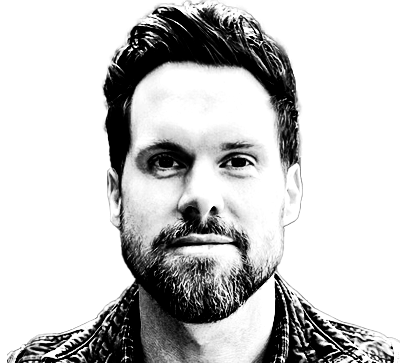

As a murderous Islamic regime slaughtered thousands of protesting Iranians in the streets this month, Columbia professor Hamid Dabashi used the moment to wax conspiratorial about Israel and the United States.
The tenured professor of Iranian studies called the uprising an “illegitimate” protest Israel instigated “to distract attention from the ongoing genocide of Palestinians in Gaza.”
To back up his claim on Al Jazeera, he cited Israeli flags seen among Tehran protesters and former Secretary of State Mike Pompeo’s Jan. 2 playful tweet wishing “Happy New Year to every Iranian in the streets” and “every Mossad agent walking beside them.”
Dabashi used similar talking points on the Rethinking Humanitarianism podcast the next day.
He acknowledged the role Iran’s economic crisis has played in the uprising — although he blamed that too on America and Israel.
It’s the sanctions, “instigated by Israel,” the United States imposed on Iran to keep its nuclear program at pre-weaponization levels.


In case his feelings about the situation weren’t clear, Dabashi added he wouldn’t be surprised if America or Israel displayed a “sort of 19th-century vulgarity” by kidnapping Ayatollah Ali Khamenei “exactly as they did in Venezuela” with Nicolás Maduro.
This talk is old hat for Dabashi, who’s been teaching at Columbia for four decades.
After America pulled out of the Iran nuclear deal in May 2018, he wrote on social media: “Every dirty treacherous ugly and pernicious act happening in the world, just wait for a few days and the ugly name of ‘Israel’ will pop up as a key actor in the atrocities.”
In a 2004 article for the Egyptian newspaper Al-Ahram, he wrote about Israeli Jews: “The way they talk, the way they walk, the way they handle objects, the way they greet each other, the way they look at the world. There is . . . a vulgarity of character that is bone-deep and structural to the skeletal vertebrae of its culture.”
 Al Jazeera English/Facebook
I took Dabashi’s class Contemporary Islamic Civilization in 2017, in my first semester as a Columbia School of General Studies undergraduate at 33 years old.
Since I’d just arrived at the university, I wasn’t yet familiar with Israel hatred that permeates the campus or the naked anti-Americanism that lies at the heart of the modern progressive movement.
Dabashi began his debut lecture by solemnly stating the land we occupied had belonged to the Lenape people “before Europeans colonized it.”
It was my first time witnessing a land acknowledgment, a performative gesture activist instructors use to signal their commitment to “decolonization” and anti-capitalism.
I still considered myself a progressive then, so I was eager to participate in the ritual and soak up everything Dabashi had to teach me about world politics.
 Families and residents gather at the Kahrizak, Iran, coroner’s office confronting rows of body bags as they search for relatives killed during the regime’s violent crackdown on nationwide protests. MEK/The Media Express/SIPA/Shutterstock
As the weeks went by, though, and Dabashi’s disdain for the West became more and more evident, I sometimes found myself thinking how strange it was to hear an Iranian-American immigrant deride a world in which he clearly had found so much freedom and opportunity.
As a gay man who was recently able to marry the man he loves, I knew I could never muster that level of disdain.
Over the three years that followed, I realized Dabashi isn’t an outlier on Columbia’s campus but just one of many radical instructors indoctrinating young people to despise America and pin all the world’s major conflicts on Israel.
By the time I graduated in May 2020, my political perspective had changed.
As had my approach to learning about world events.
Since so many of my professors were teaching through the political framework of critical theory, I often found myself in Butler Library late at night, combing through the stacks for books to help me fill in the gaps on my own.
Being an older student, I could distinguish facts from left-wing political narratives — unlike my younger classmates, who seemed to indiscriminately accept everything our most radical instructors told them was true.
 Protesters gather on London’s Downing Street in a National Council of Resistance of Iran-organized demonstration. AFP via Getty Images
My penchant for doing my own research persists.
After I heard my old professor’s remarks, I asked Ali Safavi, an official with the Foreign Affairs Committee of the Paris-based National Council of Resistance of Iran, for his thoughts.
Safavi, 72, was an anti-shah student protester in the 1970s. His older brother, Hossein, was executed in 1981 at age 29 by the current Iranian regime.

Dabashi’s conspiracy theories “collapse under basic scrutiny,” Safavi told me.
“Protesters are not manipulated into confrontation; they are responding to live ammunition, executions, torture and economic suffocation. The Iranian people are actors reclaiming sovereignty stolen by a theocracy.”
Not only that, Dabashi is just reciting one of the mullahs’ favorite talking points.
“Reducing a popular uprising to a foreign plot is the regime’s oldest deflection tactic — one used repeatedly since 1979 to deny responsibility for its own crimes,” said the former sociologist.
“Blaming external actors for the regime’s violence is an attempt to erase the agency, and the suffering, of Iranians themselves.”
Safavi said the country’s economic crisis “long predates sanctions,” with the Islamic Revolutionary Guard Corps one big reason.
“Instead of being invested in the welfare of the nation, the Iranian people’s national wealth has been siphoned off to fund, arm and train the regime’s proxy militias across the region and beyond, all while expanding the IRGC and reinforcing the machinery of repression at home,” he told me.
Besides, US sanctions are aimed at the regime’s “military and terrorist apparatus — not the Iranian people,” he added.
“It was the regime that deliberately chose repression and regional militarism over economic relief and public welfare.”
Yashar Ali, an Iranian-American journalist whose family members still live in Iran, had a similar response to Dabashi’s remarks.
“Anyone bringing up Mike Pompeo’s inane tweet as a way to delegitimize the uprisings in Iran is acting as an agent of the Islamic Republic — whether wittingly or unwittingly,” he told me.
“Of course Mossad operates within Iranian territory; every major intelligence agency does,” he said.
“But Mossad cannot compel well over 1 million unarmed Iranians to take to the streets and risk being slaughtered by the regime.”
As convincing as Safavi’s and Ali’s words are, something tells me they wouldn’t have any effect on Dabashi’s perspective — nor on the impressionable young minds he’s busy “decolonizing” at Columbia.
No, he and his colleagues across the country will be indoctrinating college students for many years to come.
Ben Appel is the author of “Cis White Gay: The Making of a Gender Heretic.”
